
CALL A SPADE
A Club

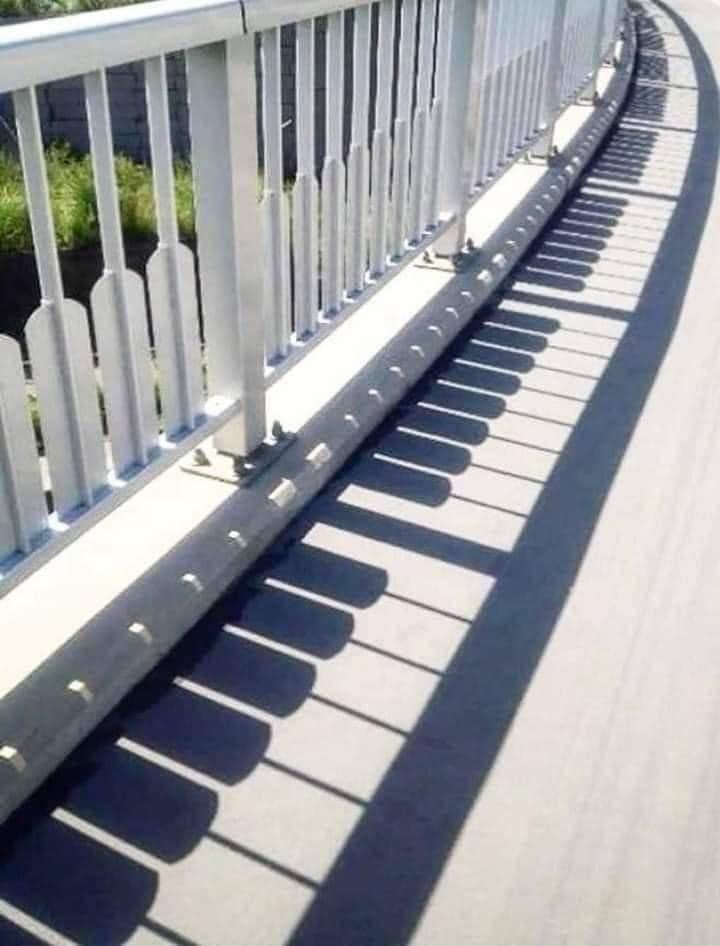
Some see piano keys in the shadows of this fence, but I don’t. Why? Because I play the piano and know what the keyboard looks like. My experience shapes my perception. The black keys on a piano occur in a pattern of two then three. So, what looks like a keyboard to some appears as a flat-out fraud to me. How can we both look at the same exact thing and not see it as the same exact thing?
This skewed perception carries into arguments: You say one thing while I react to something entirely different altogether. This is also how wars start: my property line ends here but you are convinced that my property was in your territory to begin with. It isn’t just a matter of perception. It’s how we think about what we see. And our thinking is so riddled with bias, misperceptions and flawed memory that it is suspect at best.
“Our brains are designed to prove us right,” states behaviorist, Lysa Morrison. If we think someone doesn’t like us, we will only hold in our thoughts examples of what makes that true. Anything else our brains will ignore. Our perceptions of things drives how we feel and what we do. Her example of buying a used car shows that some of us are motivated by achievement of goals while others of us are more focused on problems to be avoided.
The ‘Loss Aversion,” theory says that we will do more to avoid losing something than we will to gain something. Hoarding is an example of this. Further, we feel the pain of loss twice as intensely as we feel the equivalent pleasure of gain. So, losing $100 feels twice as bad as winning $100 feels good. As a result, we try to avoid losses in every way possible.
I once had a client who was duped into marriage with promises of forever love. Within weeks, she was smacked around, sexually humiliated and even videotaped without her knowledge. Even though she is now free of the monster, she is not really ‘free.’ She continues to agonize over what she has lost: a marriage, a partner, a promise—instead of what she has gained: freedom, another chance at love and no abuse.
Oscar Wilde famously said, "No object is so beautiful that, under certain conditions, it will not look ugly.” Perhaps that is something we can all agree on?